

Creator Fraud, Abuse, and Misconduct
What is Creator Fraud, Abuse, and Misconduct?
The TikTok Shop Creator Terms of Use outlines a list of behaviours and practices that creators on TikTok Shop must not engage in. This includes any form of fraudulent activity, such as fraudulent content or engagement across user profiles, posts, comments, chats, and other platform interactions. Creators must also ensure they follow TikTok Community Guidelines and TikTok Shop Creator Policies.
Creators are responsible for ensuring that they do not engage in any of the following practices: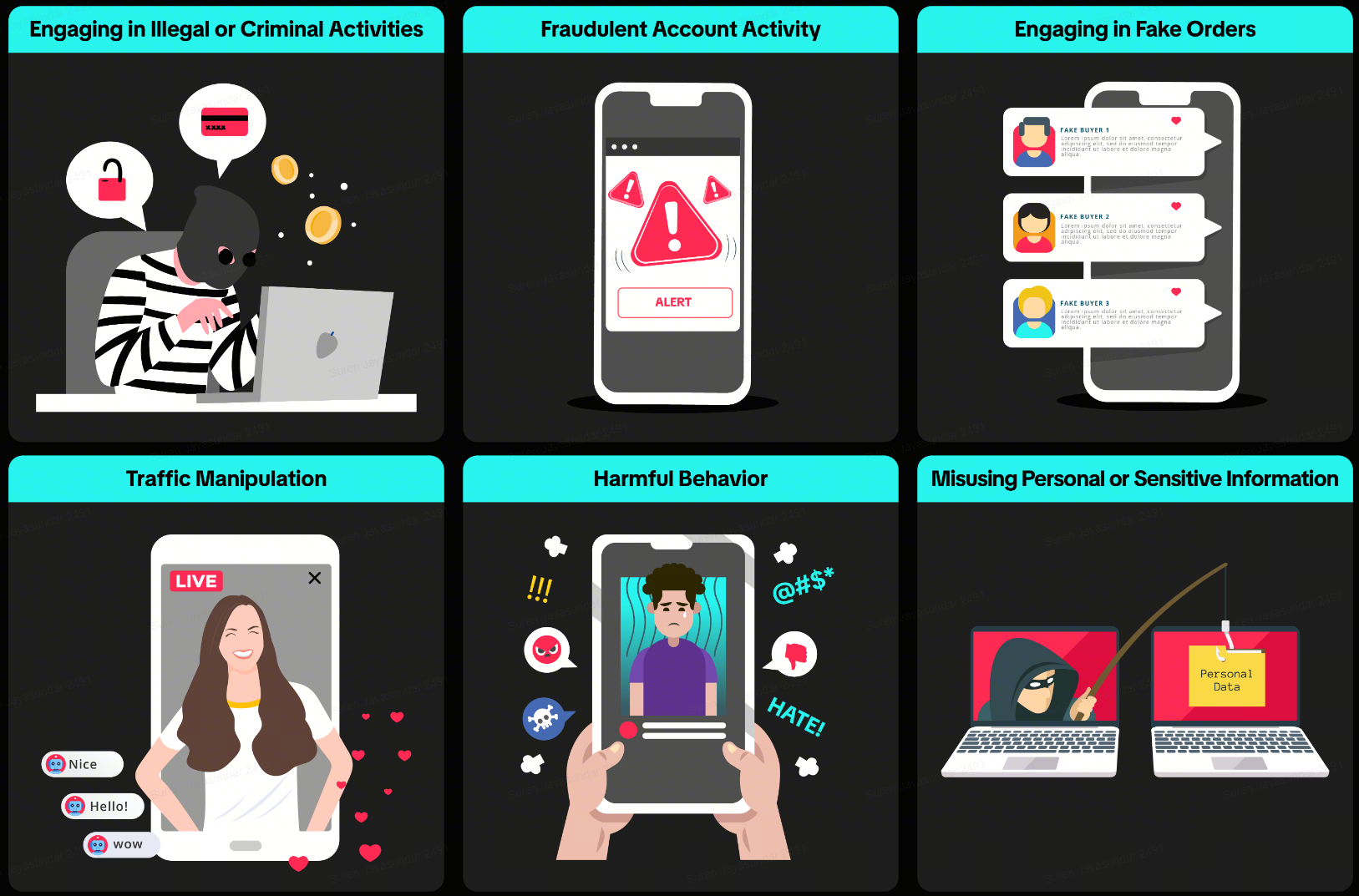
Engaging in Illegal or Criminal Activities
This involves using the TikTok Shop platform for activities that are prohibited by laws and regulations, or may result in civil liability. Examples include:- Money laundering, e.g. Multiple accounts controlled by the same individual buy from each other repeatedly to make illegal money appear like legitimate sales.
- Identity theft, e.g. creating or operating an account using stolen or unauthorised personal information, such as someone else's name, identification documents, or bank details, to pass verification checks.
Misusing Personal or Sensitive Information
This refers to collecting, sharing, disclosing, or misusing personal or sensitive information through the TikTok Shop platform without proper authorisation, consent, or a legitimate purpose. Examples include:- Using deceptive or malicious tactics to obtain personal or sensitive information, e.g. a creator runs a livestream giveaway and asks viewers to submit phone numbers, addresses, identification details, or other personal information through direct messages for illegitimate purposes.
Fraudulent Account Activity
This occurs when a creator uses malicious methods to circumvent TikTok Shop's security measures in order to create fake accounts or bypass account restrictions. Examples of such activity may include:- Using malicious software or bots to generate fake TikTok accounts
- Abnormal login activity, e.g. frequent logins across multiple accounts from the same device, network, or other shared resources, which may indicate coordinated control.
- Association with banned or penalised accounts, e.g. being linked to accounts that have previously been banned or subjected to enforcement actions.
Engaging in Fake Orders
Fake orders refer to any TikTok Shop orders that are not placed by genuine buyers or do not reflect legitimate purchase intent. Such orders may be placed by creators themselves or by individuals connected to them. Examples include:- Placing orders via their own showcase, short videos, or livestreams with the intention of:
- Generating fake sales performance/traffic
- Abusing platform incentives, subsidies, or other benefits
- Gaining an unfair advantage in campaigns, rankings, or reward programmes
- Placing orders on behalf of customers who do not have TikTok Shop accounts
Harmful Behavior
This refers to any use of TikTok Shop that causes, or is likely to cause, harm, loss, or damage to other users, creators, sellers, or the platform. This may include sample abuse, such as repeatedly requesting free samples without genuine promotional intent, or fulfilling promotion obligations through poor-quality, non-informative, irrelevant, or gibberish content that does not provide meaningful promotional value.Inauthentic Engagement Behaviors
Fake Interactions
These activities involve directly manipulating platform metrics or algorithms to artificially boost performance. Examples include:- Exploiting platform mechanisms to generate fake orders, views, likes, comments, followers, or positive reviews.
- Developing, using, or distributing malware, bots, or modified code to artificially increase orders, views, likes, shares, followers, or comments.
- Carrying out actions intended to artificially inflate user engagement or mislead TikTok's recommendation systems.
- Providing or facilitating services that artificially increase engagement, such as selling followers, likes, comments, views, or reviews.
- Sharing instructions, guidance, or methods on how to artificially increase engagement on TikTok.
- Creating content or incentives designed to manipulate others into inflating engagement metrics, such as "like-for-like" schemes, engagement exchanges, or fake interaction incentives.
Traffic Manipulation
This involves generating traffic, exposure, or engagement through improper, deceptive, or non-genuine means. Examples include:- Using third-party service providers, bots, or coordinated networks to increase likes, followers, shares, or comments on livestreams or other content.
- Using fake offers, misleading promotions, price manipulation or deceptive claims to induce users to take specific actions, such as viewing content, placing orders, liking, commenting, or sharing, in order to gain higher exposure or recommended traffic.
Inauthentic Engagement (Buyer Manipulation)
These behaviors involve deceptive or manipulative tactics intended to influence buyer behavior or artificially drive engagement. Examples include:- Tricking buyers or encouraging them through deceptive means to place orders, like content, leave comments, or interact with content.
- Coordinating or participating in engagement groups, where users agree to interact with each other's content to artificially boost performance.
- Using deceptive practices, such as clickbait or misleading calls to action, to manipulate buyer interactions.
- Disguising coordinated or artificial actions as organic growth or genuine buyer interest.